Warning: Late repayment can cause you serious money problems. For help, go to MyMoney.gov. We are a broker, NOT a lender.

Warning: Late repayment can cause you serious money problems. For help, go to MyMoney.gov. We are a broker, NOT a lender.
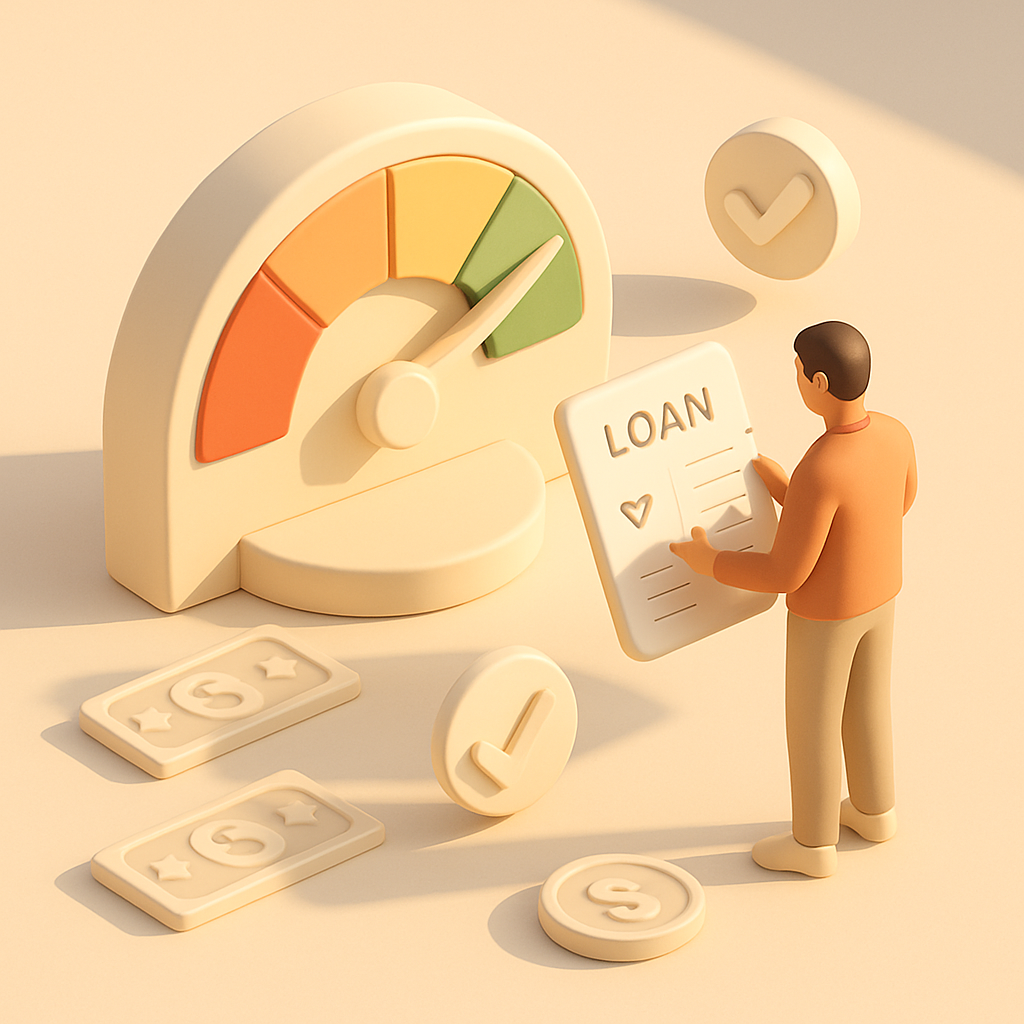
Your credit score influences nearly every major financial decision you make. Whether you plan to apply for a personal loan, auto loan, student loan, or even a home mortgage, lenders look closely at your credit history to determine how risky it may be to lend to you. Understanding the relationship between credit score and loans can help you qualify for better interest rates, higher loan amounts, and more flexible repayment terms.
This guide explains how credit scores work, why they matter, what credit score needed for personal loan approval, what is a credit score range, and what is a good credit score to buy a house. By the end, you will know exactly how lenders evaluate you and what steps you can take to improve your borrowing power.
A credit score is a three digit number that reflects how responsible you are at managing credit. Lenders use it to estimate your likelihood of repaying borrowed money on time. The two main scoring systems in the United States are:
• FICO Score
• VantageScore
These scores are based on information found in your credit reports from the major credit bureaus. The higher your score, the lower the risk you present to lenders.
To learn more about how scores are calculated, you can visit the education center at Experian here:
Experian
Both FICO Score and VantageScore use a similar 300 to 850 point scale. Your number falls into one of several categories that lenders use to guide loan decisions.
• 300 to 579: Poor
• 580 to 669: Fair
• 670 to 739: Good
• 740 to 799: Very Good
• 800 to 850: Excellent
Your place in this range matters because it affects the loan terms you receive. A borrower with a 780 score may receive very low rates, while someone with a 610 score may still be approved but pay much more over time.
You can check your credit report annually for free through:
Annual Credit Report
For ongoing free credit monitoring, many people use:
Credit Karma
Every lender has its own criteria, but most loan decisions depend heavily on your credit score. Here is how your credit score affects the loan approval process.
Higher credit scores increase approval odds for nearly every type of loan. Lower scores may still qualify but come with restrictions or higher rates.
Your credit score directly influences the annual percentage rate (APR) you receive. A strong score gives you access to lower interest rates, which reduces your total repayment amount.
Borrowers with good credit often qualify for higher loan amounts because they are seen as more reliable.
Some lenders offer longer loan terms to borrowers with higher credit scores, allowing lower monthly payments.
To compare average interest rates based on credit score ranges, you can visit:
NerdWallet
Many people want to know what credit score needed for personal loan approval. While requirements vary by lender, many personal loan providers look for scores in the range of 600 to 640 or higher.
Borrowers who fall below this range may still qualify, especially with online lenders or credit unions, but the loan may come with:
• Higher APR
• Lower maximum loan amounts
• Additional documentation
• Shorter repayment terms
For a clear overview of personal loan requirements, you can explore:
Investopedia
Mortgage lenders have stricter criteria because home loans involve much larger borrowing amounts. According to common mortgage rules:
• Conventional mortgage: 620 or higher
• FHA mortgage: 580 or higher
• VA mortgage: Varies but often 620 or higher
• Best mortgage interest rates: Often 740 and above
Improving your credit score before buying a home can save you thousands over the life of the loan.
For mortgage education and guides, visit:
Money Under 30
While your credit score is important, it is not the only factor lenders review. Here are the major items lenders look at when deciding whether to approve your loan.
Lenders want to see consistent on time payments. This is the most influential portion of your score.
This refers to how much of your available credit you are using. Keeping this ratio below 30 percent is ideal.
A longer history of responsible credit use usually improves approval chances.
Lenders compare your monthly debt payments to your monthly income. Lower ratios show that you can manage additional debt.
Stable income improves approval odds and may give you access to better terms.
For more detail on debt to income ratio, you can read this helpful resource from:
The College Investor
Your credit score influences several major loan types in different ways.
Good credit increases approval odds and reduces your APR. Lower scores can still work with certain lenders.
Auto lenders tend to be more flexible because the vehicle secures the loan. Borrowers with scores above 660 typically receive good rates.
Federal student loans do not use credit scores, but private loans do.
Mortgages require strong credit, especially for the best interest rates.
Understanding this helps you prepare long before you apply.
Improving your credit score is one of the most effective ways to gain access to better loan terms. Here are proven strategies.
• Pay bills on time
• Reduce credit card balances
• Avoid excessive applications
• Dispute report errors
• Keep old accounts open
• Avoid high credit utilization
Even a small score increase can significantly improve the quality of your loan offers.
Does checking my credit score lower it
No, checking your own score is a soft inquiry and will not affect your score.
Can I get a loan with bad credit
Yes, many lenders offer personal loans, auto loans, or secured loans to borrowers with lower scores, but rates may be higher.
Does income matter as much as credit score
Yes, lenders consider income and employment as part of the approval process.
Will a personal loan help my credit score
If you make on time payments and manage the loan responsibly, your score can improve over time.
Understanding credit score and loans helps you take control of your financial future. Your credit score affects approval odds, interest rates, and how much you can borrow. Knowing what credit score needed for personal loan and what is a credit score range helps you compare lenders and prepare for the application process. If you are planning to buy a home, learning what is a good credit score to buy a house gives you clear direction for long term financial planning.
The best approach is simple: check your score, improve your credit habits, compare lenders, and choose loans that match your financial goals. A strong credit score gives you more borrowing power and saves you money for years to come.

Credit Results is a trading style of Fort Media LLC, a company incorporated in the United States.
Principal Office Address: 7345 W Sand Lake Rd, Ste 210, Off 7688, Orlando, FL 32819.
Registered Office Address: Resident Agents Inc, 8 The Green, Ste R, Dover, DE 19901.
Fort Media LLC operates as a credit broker, not a lender. We do not charge customers a fee for using our services but may receive a commission from lenders or other brokers if a customer enters into a consumer credit agreement following an introduction through our platform. We work with a selected panel of lenders and brokers to offer a variety of credit and loan products.
When you apply for a loan through us, the lender will provide you with all relevant information about interest and associated charges. Please note that the lender or broker we refer you to may not offer the cheapest loan available for your specific needs.
Loans are available to individuals aged 18 or over and are subject to status and affordability checks. While many applications are processed online, certain circumstances may require lenders to contact you directly.
By using our services, you agree that all communications will be in English.